fbpx

Ba Lone Lay

Ba Lone Lay

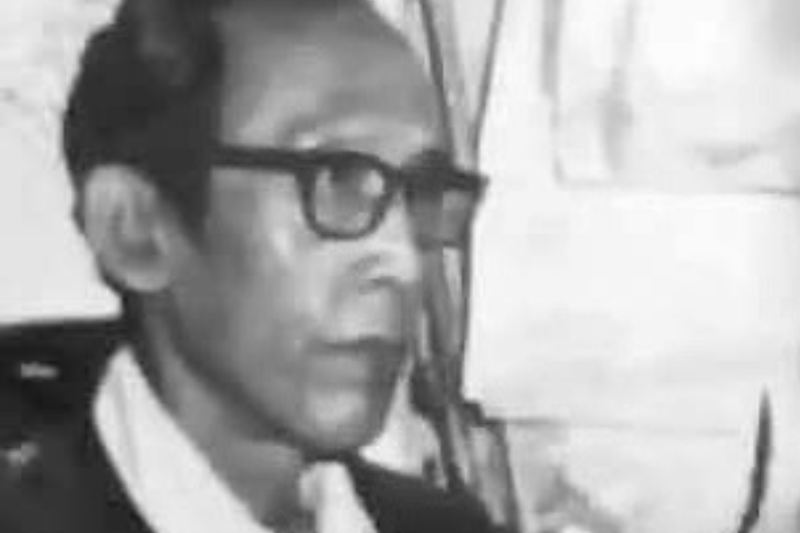
U Ba Lone Lay was proficient both as a painter and as a commercial illustrator. In several illustrations for magazines and books, he displayed his talent. U Ba Lone Lay worked as a commercial artist and a lecturer of commercial painting at the State School of Fine Arts in 1963. He traveled to the USSR in 1970 as part of a cultural exchange program between the USSR and Myanmar for a month to study art and painting.

In 1980, he retired from the post as lecturer at the Yangon School of Fine Arts and continued drawing posters and oil paintings after he retired. He was diagnosed with heart disease in 1997 and died one year later, in March 1998, at the age of 73, in his home in Yangon.

San Pe

San Pe

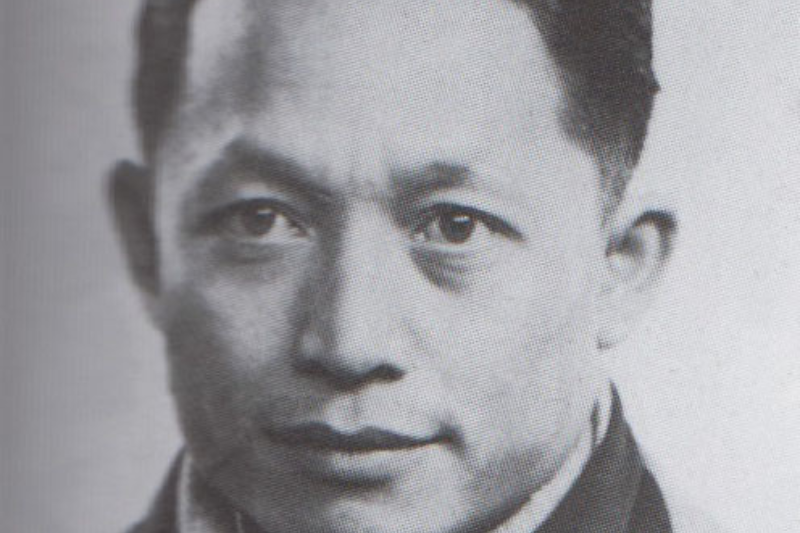
U San Pe was a skilled artist who worked in a variety of media. He was conceived on April 30, 1918, in Taunggyi. He completed a month-long correspondence study with a Pyinmanar art school in 1934. He was assigned to learn sculpture by renowned artists in the Nyaung Shwe neighborhood. He also acquired skills in metal, wood, and stone sculpture.

U San Pe then resumed his painting studies under U Ngwe Gaing in 1937. He assisted British sculptor Mr. Copnell in casting the Bogyoke Aung San bronze statue. U San Pe died on June 7, 1977, as the government was preparing to award him the Independence Archive award.

Saw Tint Wai

Saw Tint Wai

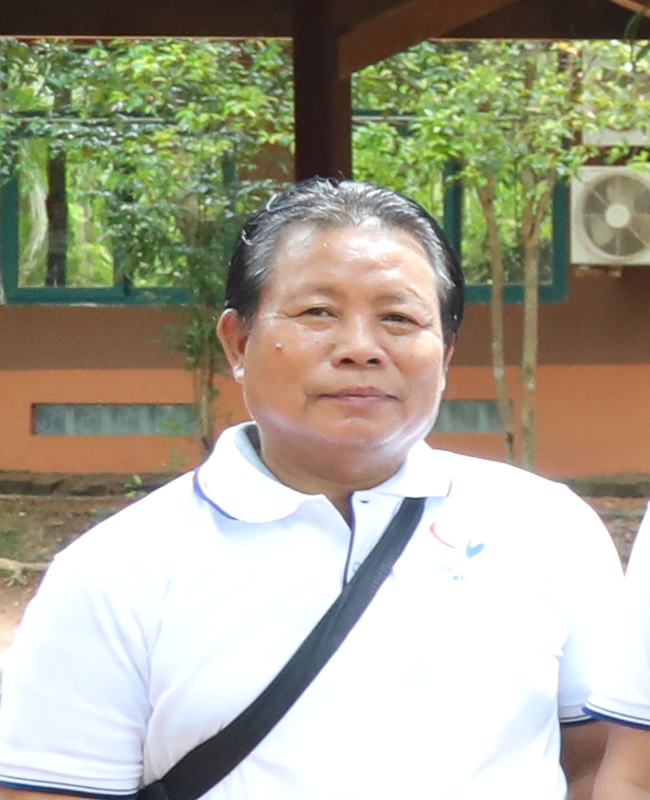
1966: Born in Hlaing Bwe, Kayin State, Son of U Kyaw Shwe & Daw San Myaing.

1982 – 85: Diploma Fine Art, State School of Fine Art (Yangon).

Studied Under: Saw Thant Zin, U Thu Kha, Bogalay Kyaw Hlaing, U Mya Aye, U Kyaw Lay & Panchi Hla Tin Htun.

Local Exhibition

Oil, Acrylic & Water Color Works have been show in over (100) Exhibition in Myanmar.

International Exhibition

1991: Participated in China & Myanmar Welfare Art Exhibition in (Beijing)

1996: Participated in exhibition of Water Color Painiting in (Germany)

Solo Show

2009: The Myanmar Traditional Artist and Artisans Organization (Central) Yangon.

Awards

2008: Awarded 1st Prize in Hninzi Gone Home For Age Water Color Competition.

2010: Awarded 1st Prize in Hninzi Gone Home For Age Oil Color Competition.

Collection

1987: National Museum (Yangon)

2009: Tun Foundation Bank.

Member: Myanmar Artist And Artisans Organization (Central)

Recent: Full Time Artist.

Zwe Yan Naing

Zwe Yan Naing
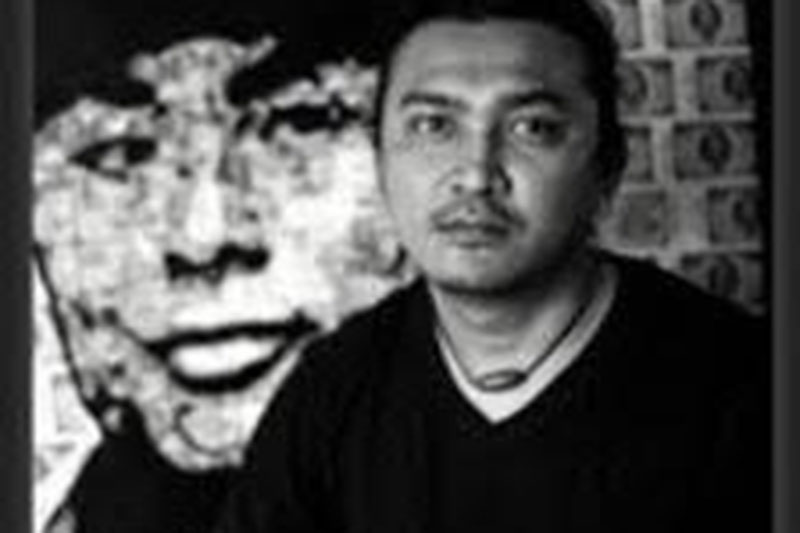
Zwe Yan Naing was born in Taung Goke, Rakhine State in 1984. He studied at the State School of Fine Arts in Yangon. His mentors include influential artists such as U Myint Naing, U Kyaw Thu Raein, U Win Tint, U Mon Thet and U Than Kywe.

He did his first solo exhibition in 2011 at Pansodan Gallery, where the exhibition was named ‘A Burmese Girl’. He chose this because, ‘A Burmese girl is in one way an artist’s dream, and then in another way the magic power in that dream. She is born as the artist’s first painting. She lives near the artist, every second, every day, every night. She makes the artist dream. She creates dreams for the artist. The artist was brought to dream by her. This Burmese girl is not a typical girl, except for the Thanakha on her cheeks. She is an extraordinary. She is nameless. That is her beauty, her ideas, her manners, everything. ‘

Education: Learnt Pali Language as a monk in monastery (1997 to 2005), Studied at State school of Fine Arts (2007 to 2010),


Career: Worked as a caricature artist (2008 to 2011), Professional full-time artist (2011 to present)

Local exhibitions

  • 2011 – The Myanamr Lady, Pansodan Gallery, Yangon
  • 2014 – To Value Something, Pansodan Art Scene, Yangon
  • 2015 – Portraits of Revolutionary, 7th Joint Bar, Yangon
  • 2016 – A Moment Suspended in Time, Pansodan Art Scene, Yangon
  • 2016 – Blending Colours in Urban, Gallery 65, Yangon
  • 2017 – Conceptual Art, Café Innlay, Mandalay

Selected group shows

  • 2011 – “Inside Stories, Brighton Festival” in UK
  • 2012 – “The Art Auction, We Women Foundation” in Netherland
  • 2012 – “Contemporary Art from Burma, Cambodia and Vietnam” in Vietnam
  • 2013 – “Paintings the Transition Contemporary Art in Myanmar” in Hong Kong
  • 2013 – “A Measure of Freedom Contemporary Painting from Myanmar” in Hong Kong
  • 2013 – “Myanmar Face and Places” in Hong Kong
  • 2013 – “Brush Strokes of a Revolution” in Mumbai, India
  • 2013 – “Deconstructing Burma Art” in Bangkok
  • 2014 – “Painting Myanmar Ten Perspectives” in Hong Kong
  • 2014 – “Banned in Burma Painting Under Censorship” in Hong Kong
  • 2014 – “Workshop on Politics, Business and Human Rights in Myanmar” in Hong Kong
  • 2014 – “Zeitgenossische Kunst” in Germany
  • 2014 – “Myanmar Art Crossing, Yone Arts” in USA
  • 2014 – “New Freedom for Burmese’s Artists” in USA
  • 2015 – “Prospect Myanmar Painting a Transitional State” in Hong Kong
  • 2015 – “HK Imaging Myanmar in a Time of Transition” in Hong Kong
  • 2015 – “The Thukuma Collection Contemporary Painting for Burma” in Singapore
  • 2017 – “Art Revolution Taipei 2017” in Taiwan
  • 2017 – “Parasol Art at Leeds” in NYC
  • 2017 – “Asia Hotel Art Fair Seoul 2017, AHAF” in Seoul, Korea
  • 2018 – “Myanmar-Korea Contemporary Exchange Exhibition”
  • 2018 – “Art Revolution Taipei 2018” in Taiwan

Public collections

  • Painting Myanmar: Ten Perspectives on a Changing Country” in Hong Kong Baptist University, Hong Kong. Acquired in 2014
  • “A Measure of Freedom”, Hong Kong University of Science and Technology, Hong Kong. Acquired in 2014
  • “The Myanmar Golden Land”, Linden Museum of Stuttgart, Germany. Acquired in 2015

Media“New urmese Artist between Poverty

  • “New Burmese Artist between Poverty and Commitment”, II Sole 24 Ore. November 2017 (Digital Version)
  • “About Zwe Yan Naing”, Lifestyle Magazine, August 2016, Page 50 – 53 (Print Version)

Awards

  • The Best Painting of the Year 2014, Tun Foundation Bank, Yangon, Myanmar
  • Championship for International Grand Prize Art Competition, 2017 Art Revolution Taipei (A.R.T.), Taiwan

U Ngwe Gaing

U Ngwe Gaing

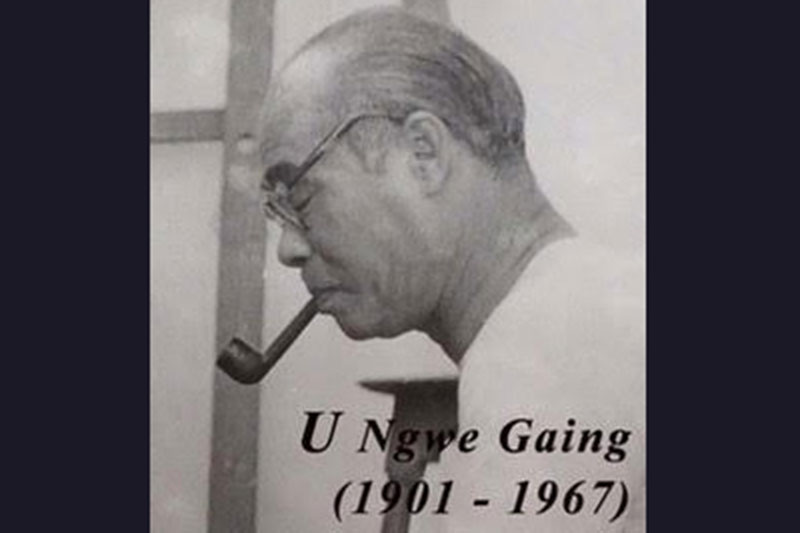
After the Second World War, U Ngwe Gaing became famous all of a sudden. As he hailed from Myeik, he used to speak with the strong accent of that district. U Ngwe Gaing was a determined man with a very frank, friendly and serious disposition. Not fond of worldly pleasures, he always abstained from drinking alcohol. Nevertheless, he had a predilection for tea and cakes, and was also fond of smoking cigars. He forever had a smile on his face. Besides being polite in manner, he was a very pious person. Thus, he commanded respect among those in the circle of literature, art, music and the performing arts. There is a saying that goes: “To master a subject, one has to acquire virtue and intelligence.” But U Ngwe Gaing’s model qualities were his eagerness and endeavor. Such qualities enabled him to become an eminent artist.

His parents were U Aike Pon and Daw Su Ma. He used to copy pictures from old newspapers

used in the grocery. When he moved to live in Dawei, he studied painting under the artist U Ba Ohn who had come to Dawei with a troupe. He also studied art under U Pho Aung, a disciple of U Ba Ohn, who arrived in Dawei and opened an art shop. When U Pho Aung returned to Yangon, U Ngwe Gaing ran the art shop on his own. He took a correspondence course with an art school in the United States. Then U Ngwe Gaing left for Yangon to continue his studies. He lived with his first and foremost teacher U Ba Ohn at Than Zay. In addition, he studied with U Ba Nyan for about three years when the latter came back from England.

During the British times before World War II, he became famous as a great artist at Pansodan in Yangon. He had his own studio and made a comfortable living. Under the Japanese regime, he served as a major in the Burma Defense Army and in the War Department. He produced documentary paintings about Burma’s Tatmadaw (armed forces). In 1951, the post-colonial government sent U Ngwe Gaing to London in order to study European paintings and to copy Myanmar royal artifacts in the British Museum. He wandered about museums and copied paintings all day long. When he came back to his lodging, he had to go over his sketches and drawings all night long to give them the final touches. Because of the language barrier, he used sketch paper to draw pictures of the food and drink that he wanted to order when eating out. In 1953, he received the title of “Ah Lingar Kyaw Swar.” A prolific artist, he created paintings of the struggle for independence, scenes of historic battles, and portraits of historic, well-known figures. He also produced huge paintings commemorating the anniversaries of Union Day, May Day and Peasants Day. U Ngwe Gaing joined U Ohn Lwin in his outstanding ability to master various styles of painting and media, including watercolor, oil, ink sketches and pencil sketches.

The painting “Life of Fishermen” is one of U Ngwe Gaing masterpieces. The background is an indistinct mountain range quiet under the blue sky. Another painting, “Life of Fisher- men,” shows the fishing families selecting the fish after the fishermen have returned from their toil at sea. U Ngwe Gaing also excelled at portrait painting. In “A Damsel Pining for Her Beloved,” we see a woman thinking about her beloved who has gone to war. Another portrait, “A Golden Neck,” is charming and lively. The lady’s jewels are as sparkling and animated as her bright smile.

U M Tin Aye

U M Tin Aye

U M Tin Aye followed in the footsteps of the “Prince of Watercolor,” Sayar Saung, who was one of his teachers. He was an heir to Sayar Saung’s dexterity and use of bright colour. His paintings and murals are highly regarded throughout the country.
His parents were U Swe and Daw Sein Nyunt. In 1939, he began painting at the newly opened State School of Fine Arts and Music. He studied under U Ba Kyi, U Maung Maung Gyi, U Ba Nyan, U San Win, U Ohn Lwin and U Ngwe Gaing. After World War II,

he took up the study of painting with the master Sayar Saung.

He worked as a drawing instructor and taught watercolour at the State School of Fine Arts when it reopened in 1952. In 1957, he received a scholarship to study modern art in Munich for one year. In 1963, he and U Thaung Han produced a large painting (17.5’ x 22’) on Myanmar’s agriculture to be presented to the World Health Organization (WHO) office in New Delhi by the Myanmar Government.
In 1964, U M Tin Aye returned to West Germany to study stage design and painting. In 1971, he went to England and Italy. In 1975, he was appointed art director for a state culture troupe that performed in Japan. In 1977, he became the headmaster of the State School of Fine Arts. Shortly after becoming chairman of the Myanmar Tradi- tional Artists and Artisans Association, he passed away.
Art experts claim that he contributed to the art of watercolor painting the practice of using more water, more color and bigger brushes. The results are universally regarded as enchanting. Of his paintings, “The Kyaik Thalan Pagoda of Mawlamyaing” and “A Typical Hut,” are his masterpieces. Examples of his fine mural paintings include the repre- sentations of the Buddha’s life on the walls of the Pavilion of Shwedagon and the Maha Wizaya Pagoda (1990), and on the inner wall of the Myanmar Monastery (1992).
U M Tin Aye’s painting “On the Shwedagon Platform” is another masterpiece. In this paint- ing, he emphasizes the magnificent stairway. The composition is excellent. In the fore- ground, a bronze bell, which seems to block a bit of the view, in fact leads the viewer’s eye to pilgrims in the religious hall. This artist, the son of U Pho Hla and Daw Myint, honored his teacher, U Ba Yin Gyi, by referring to himself as “U Ba Lwin Gyi” (i.e., the elder). He arrived in Yangon after passing the tenth standard in his hometown.
He worked as a teacher of art at the Number 4 State High School in Ah Lone. The paintings “A Time to Seek Knowledge,” “Still-life,” and “Ma Aye and Me the Artist” are examples of his perfect and well-made artworks.